• a medieval illlumination, featuring a dog biting the neck of a duck. the duck is saying "queck"

    Is this incipient blogging consistency? We shall see!

    The Tour de Fleece continues apace; I’ve been seeing incredible work from so many spinners, and I’ve been getting up every day excited to spin (despite the Misbegotten Malabrigo Incident). Full disclosure: I didn’t spin at all on Thursday, July 9 (or Day 5), because I had been averaging almost three hours of spinning a day, and my right wrist was starting to get pretty sore. Instead, I finished a pair of socks, and did a bunch of reading. Balance, in all things!

    Not much spinning got done on July 10/Day 6, because my family had a big hang-out, and it’s rare that we all get together — but I did manage a wee bit last night, after everyone had gone home, so I’m back on track.

    What have I done over the last few days? Let’s find out! I’m beginning to forget what I spun on which day, but at least I know the order I spin it all in.

    First up: I set the twist for the merino top from Frabjous Fibers, and what a springy, smooshy chain-ply that turned out to be! I would guess I have about 150 yards, though I’ve yet to break out the yarn meter to know for sure.
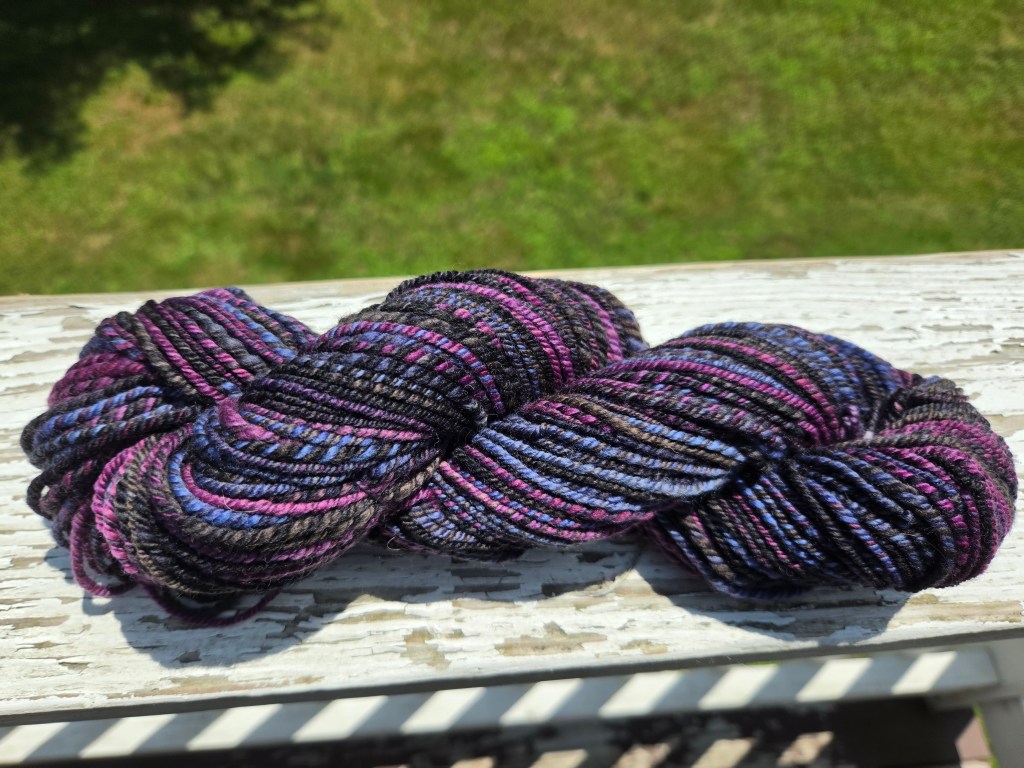
    a skein of yarn in bright sunlight, in shades of black, pink, purple, and light blue

    Up next: the Misbegotten Malabrigo, which I also chain-plied, and about which I am feeling much more positive than I was before. The sheen on this is unbelievable, and I adore the colors!

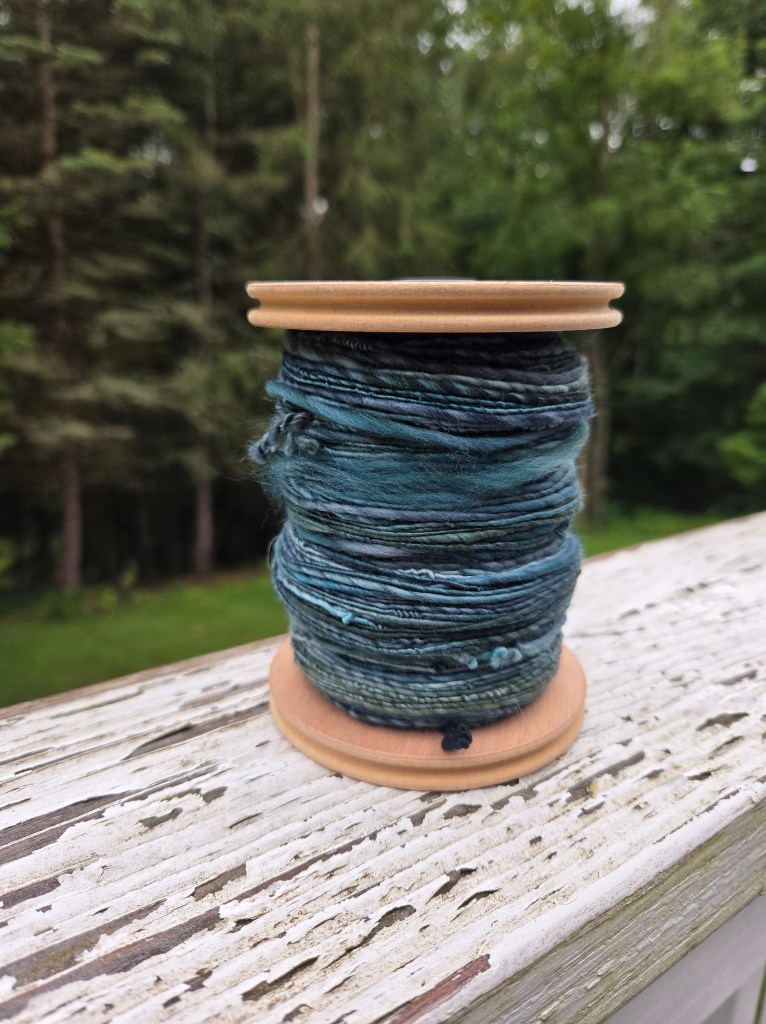
    a skein of handspun yarn in bright sunlight, in various shades of teal or turquoise

    Might be about 100 yards? I need to find that yarn meter. And my WIP tool. They’re somewhere!

    And finally: I plied the merino/tussah silk from Cloudlover69 — this time, I wound the yarn into a cake (note to self: let the yarn rest on the bobbin for more than a day, to hopefully avoid the worst of the tangles), and spun up a lovely two-ply. This has wonderful drape and luster; truly the best of both worlds!

    a skein of handspun yarn, mostly in shades of purple, but with some bright pink mixed in

    Forgive the brightness of these pictures; we are having a sunny day here in Western Mass!

    Not a bad showing for the first almost-week of the TdF! What comes next?

    Well: I spun a beautiful single with a Cormo top that was so fun to spin that I almost decided Cormo was my favorite fiber.Bon’t worry; it’s still Polwarth! But I did order a pound of Cormo from Paradise Fibers (along with two more braids of Malabrigo Nube, which should be more fun to spin now that I’m aware I need to do a lot more fiber prep), so that should be a fun spin next week, when it arrives! The Cormo has been resting since Wednesday, so I’ll do a two-ply with that tonight, along with finishing my second Cloudlover69 braid (this one just merino).

    I also should block and weave in the ends on my socks, now that they’re finally finished. I actually tried a bunch of sock patterns with this yarn before settling on plain stockinette — which makes for a nice mindless knit, but I was knitting them on size 0s so “mindless” quickly because interminable. Gorgeous yarn and colorway, though, from Willow Cottage Yarns.
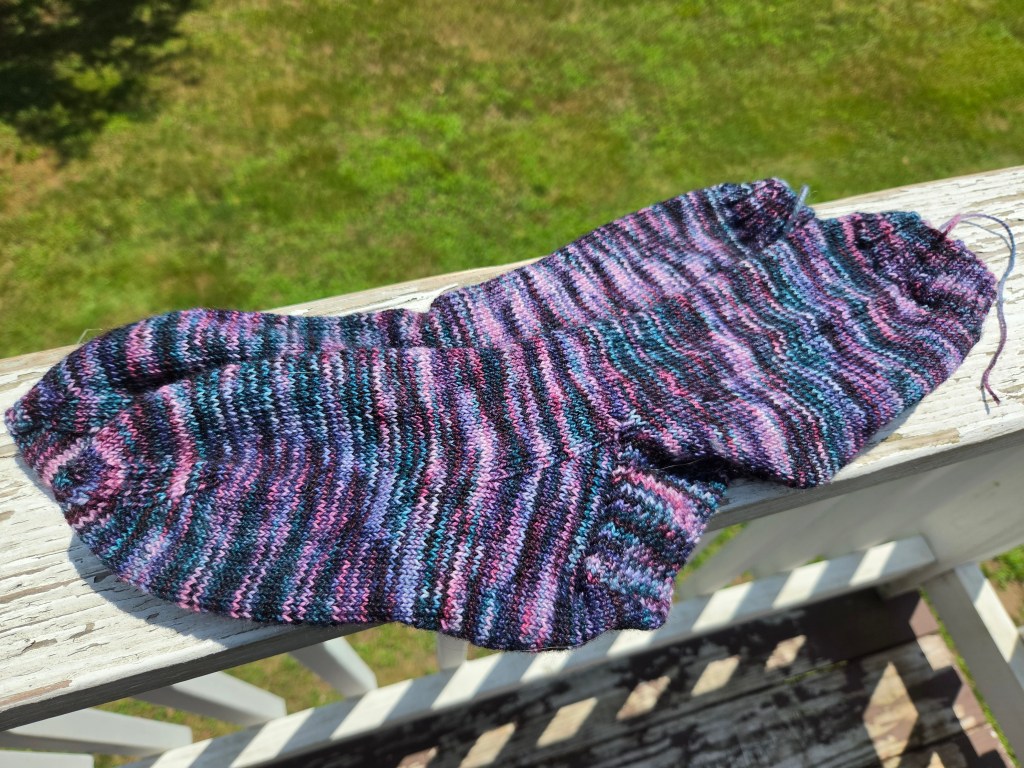
    a pair of handknit socks, on a white porch railing; they are very colorful, in shades of pink, teal, dark purple, and black
    Size 0 needles make for very sturdy socks, but at what cost?

    Time to choose a movie and get to it, I suppose! If you’re doing the Tour de Fleece, may there be no nepps in your fiber, may your ratios always be what you what, and may your singles never be overspun (unless you want them to be!).
  • a medieval illlumination, featuring a dog biting the neck of a duck. the duck is saying "queck"

    Now that I’ve been spinning seriously for just under a year, I can actually take part in this year’s Tour de Fleece! What is the Tour de Fleece, you ask? It’s a spin-a-long (handspinning, that is) that takes place concurrently with the Tour de France, with one simple rule: they ride, we spin.

    There are optional challenge days, and teams, and probably a lot that I’m missing, but this isn’t about competing with other spinners — it’s about challenging yourself, and setting goals to help you reach them.

    My goals this year were simple:

    1. Spin every day of the Tour de France (July 4-July 26)
    2. Spin down as much of my fiber stash as possible.

    So far, so good! Shall we do a recap?

    Pre-TdF:

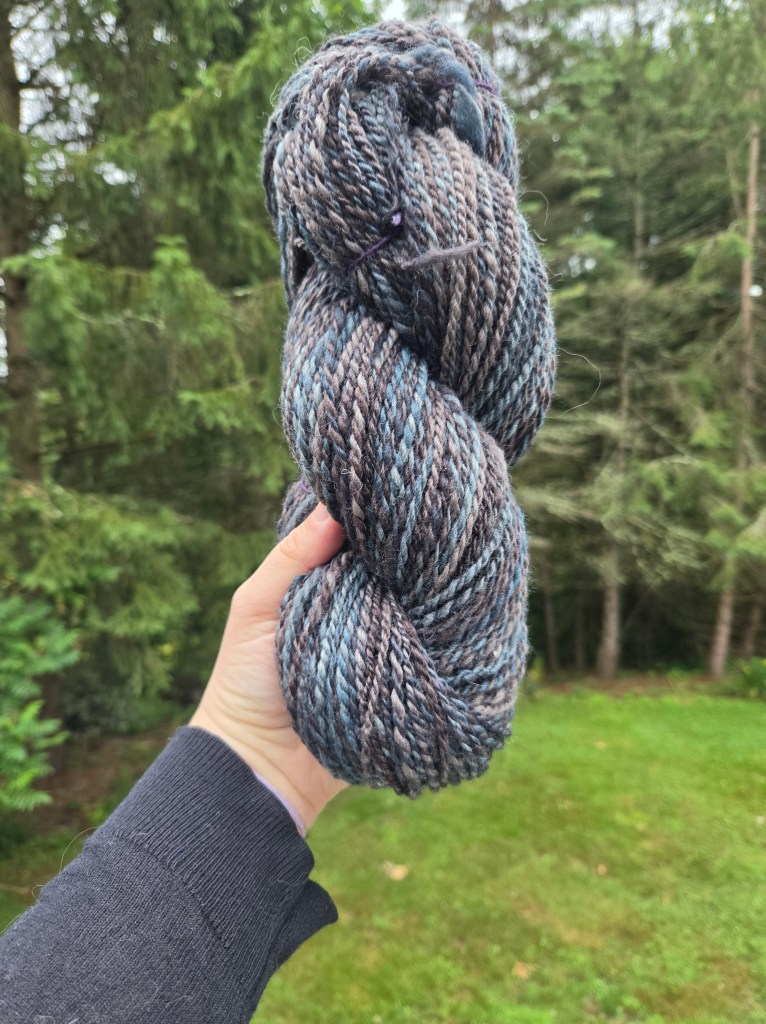
    I plied eight ounces of Corriedale top from Into the Whirled, in the colorway “The Perfect Storm”, which I’d spun up last week and let rest on the bobbins for a bit. I used my super flyer to spin up a two-ply yarn (having learned from my first foray with my super flyer that I need to let it build up a LOT more twist than I think I do), and I’m guessing I have about 250 yards total of a DK-ish weight.

    a large skein of handspun yarn, held up against a background of green trees and grass; the yarn is a variety of muted greys and blues

    TdF Day One:

    I finished spinning a braid of merino combed top from Frabjous Fibers, in the colorway “Spilled Ink”. This was an incredibly fun spin, and I got my finest, most consistent singles yet!

    After that was finished, I let it rest on the bobbin for a little while, and moved on to a braid of Malabrigo Nube. in the colorway “Aguas”. Now, I knew about how Nube can be a tough spin, both from what I’ve heard other spinners say, and from my own experience, but this was awful. Even with pre-drafting, it was a total mess to spin. If I’d thought ahead, I would have brought my hand carders with me (I’m staying at my parents’ for a bit), and turned the braid into rolags. Alas! This spin is firmly in the “congratulations, that’s the worst anyone’s ever done it” territory.

    a bobbin of green-blue yarn, lumpily spun, against a background of green trees
    I’m getting so mad just looking at this picture.


    To use one of my least favorite sayings: it is what it is. And what it is, is ARGH.

    I’ll eventually ply it, but only when the rage has faded a bit. Lessons learned! But at what cost?

    TdF Day Two

    I went ahead and chain-plied the Frabjous Fibers yarn — again, a delightful experience! I did have one challenging moment where my singles broke, and at least in my experience, that’s a big complication in chain-plying. But! I managed to reattach everything without too much disruption/thickening of the yarn, and everything else went smoothly. Another DK-weight yarn, from what my WPI estimate tells me, but I’ll know more once I’ve set the twist later.

    a bobbin of handspun yarn, against a background of green trees; the yarn is many shades of blue, grey, purple, and pink

    What’s Next

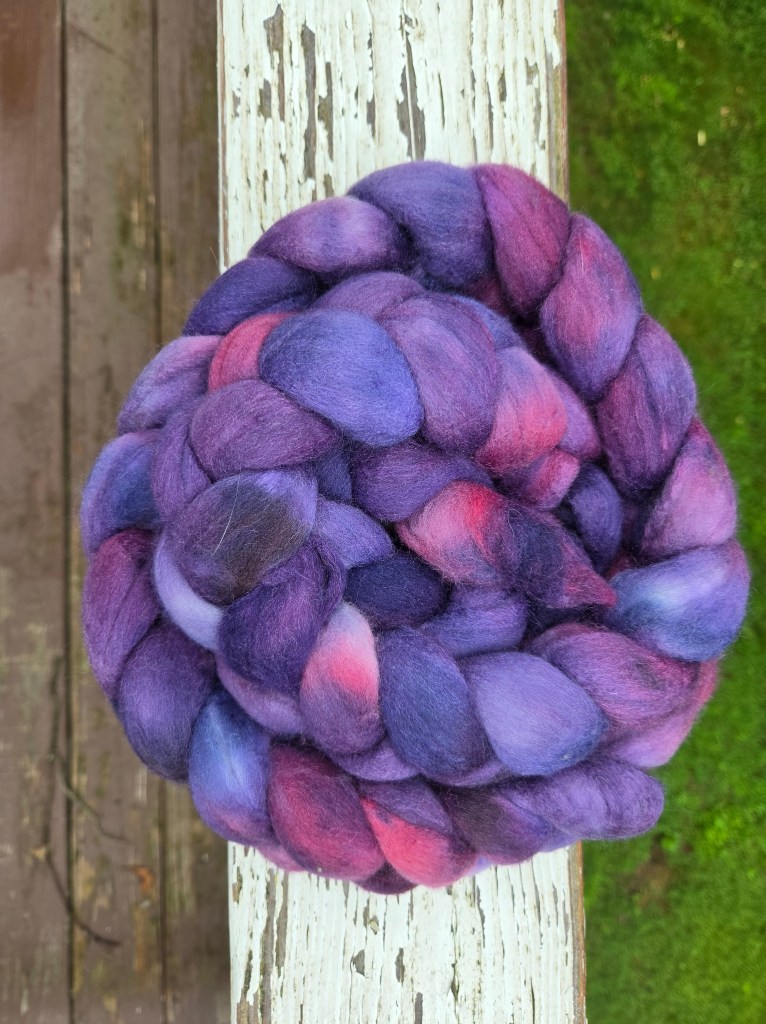
    I dug deep into the stash for this one — I think I purchased this in 2007/2008? Anyways! It’s a four ounce braid of 80% merino/20% tussah silk, in the colorway “Wineberry”, from CloudLover Fiber (now defunct, it seems). I’ll definitely be pre-drafting this a bit more than I usually do — once bitten, twice shy, etc. Wish me luck!

    a braid of hand spinning fiber, in many shades of purple and pink

    Everything Else

    I’m on vacation for most of July, and other than spinning and knitting, I don’t plan to do much! I just finished reading Ronald Malfi’s Come With Me, which was suitably creepy and melancholy, and have moved on to India Holton’s The Ornithologist’s Field Guide to Love. Writing has fallen a bit by the wayside, so I think that’ll pick up when I’m back in my own apartment. For now, I’m just happy to spin and read and hang out with my parents, while mooching off their AC!

  • a medieval illlumination, featuring a dog biting the neck of a duck. the duck is saying "queck"

    My original plans for this weekend were simple but joyful: I would go on Saturday to a yarn/fiber-dyeing studio up in Vermont, to spend a possibly obscene amount of money (under the banner of The Twelve Days of Birthday, which is a concept I just discovered thanks to a coworker), and then on Sunday, I would go out for brunch with my parents, to celebrate their wedding anniversary and my birthday.

    As it so often does, however, New England weather had other plans. We’ve gotten about six inches of snow in the past twenty-four hours, and while that’s not anywhere near crisis amounts of snow, we decided to post the brunch (and I postponed the studio jaunt, to my wallet’s relief) till the roads are clear.

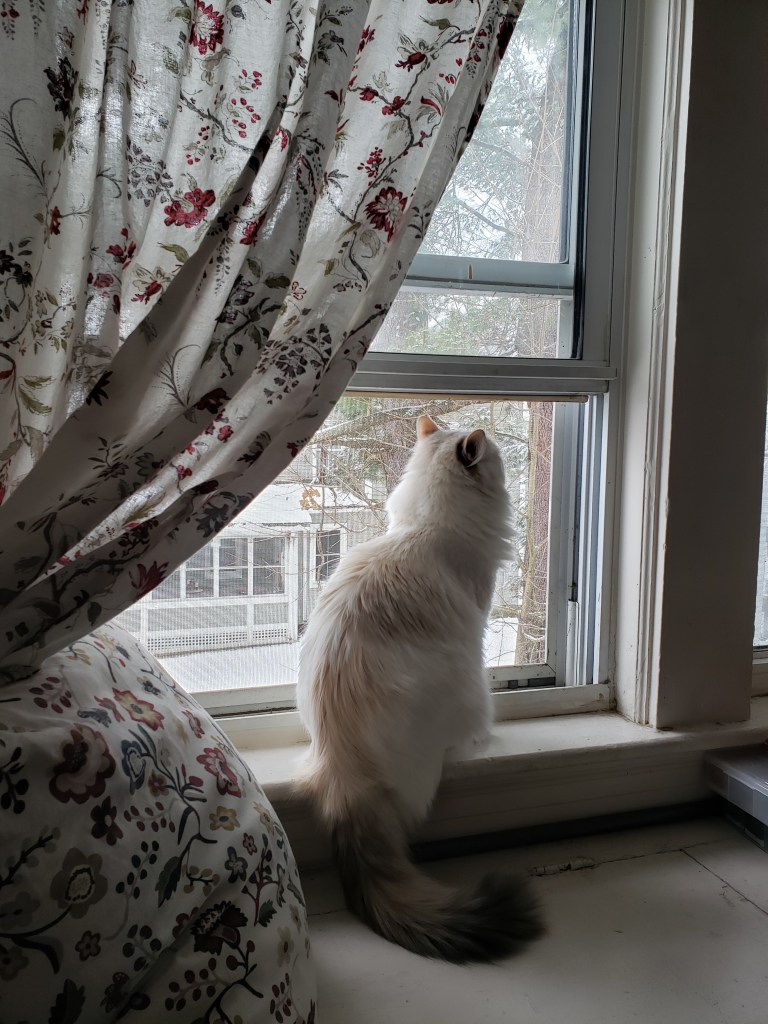
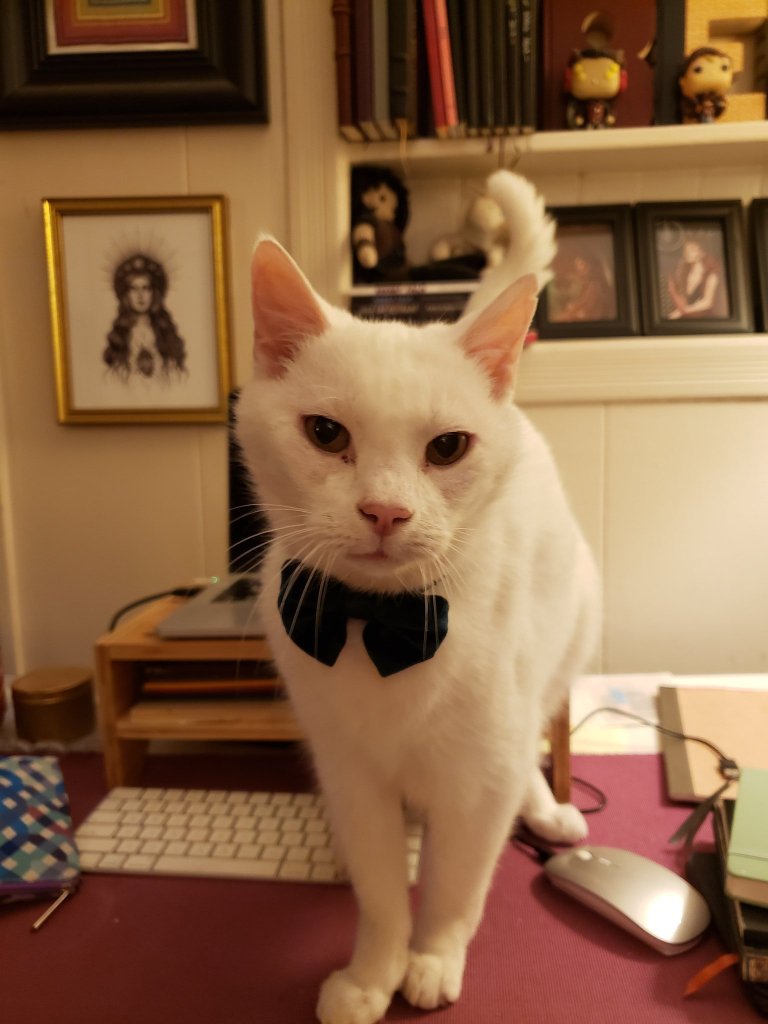
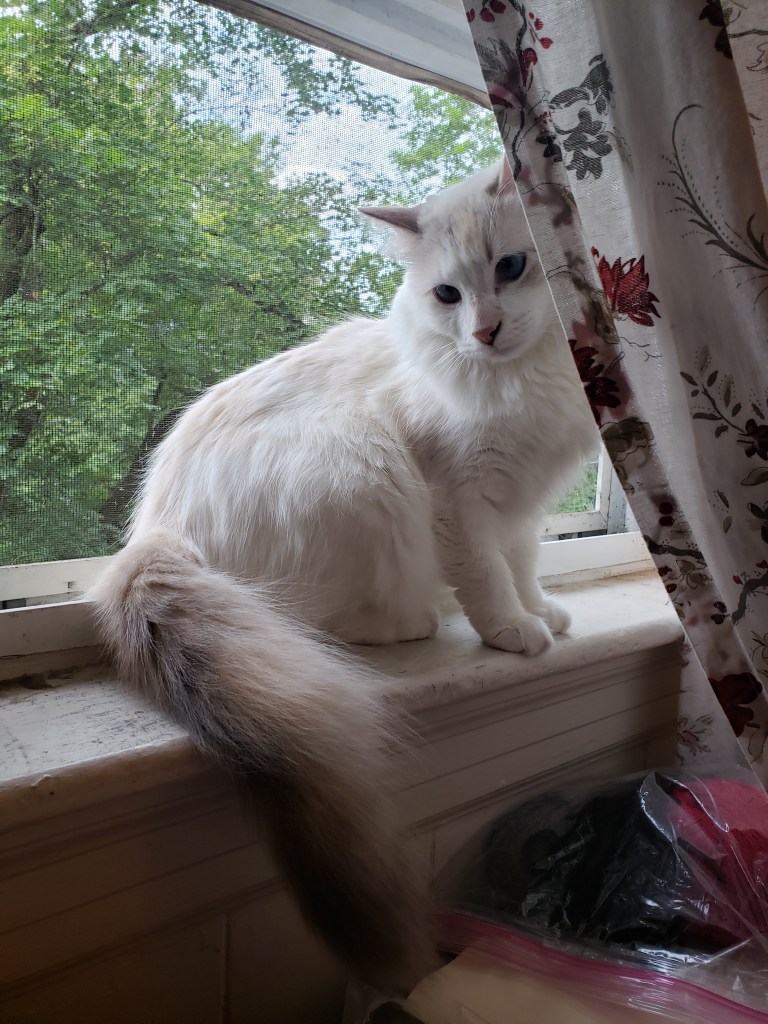
    I’m bummed about not seeing my parents, about not eating approximately twelve omelettes, about not buying yarn and fiber I do not need and also do not really have room for…but the introvert in me can’t help loving cancelled plans! Especially on a day when it’s snowy and quiet and my only real responsibility is to admire my cat as she watches the snow.

    So why not do a wee wrap-up of the last two weeks? Of all the writing, reading, and crafting I’ve done?

    Writing
    Well, some writing has been happening, but not enough to make me feel like I’ve accomplished anything. To be fair, I am still working through both a massive writer’s block and a massive confidence in my writing, so I’m trying to give myself permission to not write, if I’m feeling particularly resistant to it (or am too busy/tired/sick/etc to do so). I realize that this is somewhat counter to my goal of “writing more”, but I’m trying to remove the guilt from writing, in the hopes that I can really unleash the joy in it again.

    The writing that has been happening has mainly been on my dark fantasy apocalyptic sapphic romance (known as the Dashaverse, after its irrepressible protagonist), which has been the project of my heart since its first incarnation as a novella (!!!) on my now-defunct Patreon. So…almost ten years? No matter what else, I keep coming back to it, and it’s also garnered a lot of enthusiastic and helpful feedback in my writing groups and creative writing classes. So: I’m forging ahead! I would love to have a completed first draft of this by the end of the year, whatever that draft looks like. I’ve written 6299 words on it so far this year, which isn’t bad, considering how little I’ve actually sat down to write so far.

    I also signed up for Get Your Words Out, which is both impressively organized and also a bit daunting in scope, but I set a low word count for the year (150,000 total, across all projects), and I think this will keep me nicely accountable.

    Reading
    Unsurprisingly, it’s way easier to read than it is to write. I’ve read six books so far this year, so here are my mini-reviews of each:

    1. A Dowry of Blood by S.T. Gibson: Incredible potential in the idea of a queer reimagining of Dracula’s brides, but this ended up being scant on characterization, thin on tension, and meh on prose style, while avoiding any actual interrogation of all the abuse and manipulation going on.
    2. Small Things Like These by Claire Keegan: A slim but profound book — all the conflict is subsumed by the normalcy of the day-to-day, until the narrator finally has to make a choice. We never get to see the aftermath, but we don’t need to: in this case, the choice was what mattered. Also: fuck everyone involved in running the Magdalene Laundries.
    3. Amongst Women by John McGahern: Oh man, the father in this book drove me up a wall, but I couldn’t stop reading! Apparently I just love Irish literature? There are so many moments imprinted on my memory (the pheasant, the daughters’ shame as they walk to church at the beginning of the book, the ritual of prayer), thanks to the clear, luminous prose.
    4. The Possession of Alba Díaz by Isabel Cañas: When historical horror hits, it hits, and sadly this did not hit for me. I think it could have made better use of its time period and setting, and the ending just sort of…happened? A bit of a bummer, because I loved The Vampires of El Norte; I think this would have been improved if it was about 50 pages shorter, just to trim some of the padding and get to the horror more quickly.
    5. The Lost Reliquary by Lyndsay Ely: This was…fine. I think I’m tired of sarcastic, quippy warrior women heroines (though Lys offsets that a bit because she’s older than most, and she’s also not driven by romance), but I think the book wants to be both epic fantasy and horror, and has an uneasy relationship with both. If it leaned definitively in one direction, I think I would have enjoyed it more — but the ending is intriguing enough I’ll probably check out the sequel!
    6. You Weren’t Meant to Be Human by Andrew Joseph White: Went in expecting body horror and aliens and got those things, but also got my heart broken, because the protagonist is just so…broken, even before things go so viciously wrong for him. It’s about agency, and losing it, or realizing you never had it; it’s about parenthood; it’s about mental illness and trying to find community and being trans in the USA, in this moment in time, and it’s about grief. Beautiful, harrowing, HAUNTING. A strong contender for my top ten books of the year.

    Now I’m reading Bat Eater and Other Names for Cora Zeng by Kylie Lee Baker, and I think I’ll pick up Mouthful of Birds by Samantha Schweblin, since it’s nice to read a short story or two a day.

    Crafting
    I’ve been sadly remiss in knitting/spinning lately! I do have half of a braid of Falkland roving spun up, so I think today I’ll spin the other half, and get that plied. I also have a sweater and a sock on the needles, so I’m nicely spoiled for choice. And this coming week, I need to get caught up on pictures of the last two sweaters I’ve finished, so I can update Ravelry.

    Now: off to enjoy the soft quiet of a snow day, and maybe get some words down on the Dashaverse before I pull out my wheel and get to spinning.

    May this be a kind and just week for us all.

  • a medieval illlumination, featuring a dog biting the neck of a duck. the duck is saying "queck"

    I’m a little behind when it comes to making this list, but in fairness: I read a lot of books last year, and deciding which were the best was quite a task! Though a very pleasant one, it must be said.

    I spent a lot of time trying to figure out if I was choosing a book based on if it was one of the “best” books I read — which, to me, deals more with how well it was executed in terms of technical proficiency, pacing, use of language, communicating its central idea, etc — or if it was one of my “favorites”, which has way more to do with how much I enjoyed the book, or how well I was entertained by it. There’s considerable overlap between the two, but they are distinct concepts.

    In the end, I went with “best”, because how entertaining a book is is directly related to how effective it is; getting and keeping my attention requires technical skill as well!

    So, with that said: my ten best books of 2025!

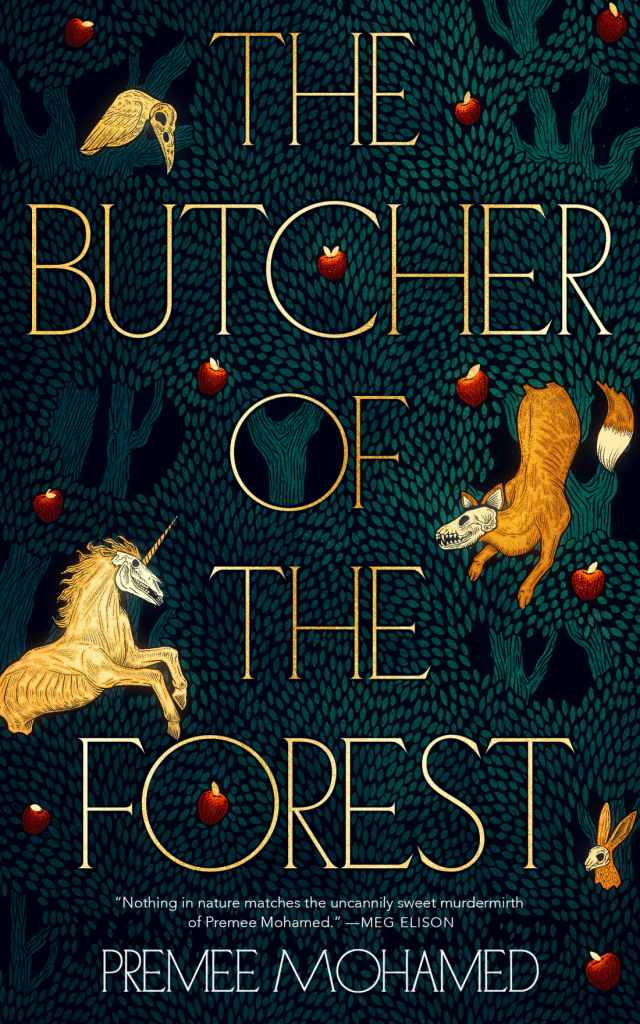
    1. The Butcher of the Forest by Premee Mohamed: I’d had this novella sitting on my TBR shelf forever, and tore through it in a day. I am weak, at all times, for works that really get their teeth into what it would be like to deal with the fey: sure, there are rules, and knowing them might help you survive or even prosper, but the rules are always changing, and you are dealing with something fundamentally alien to you. All of that is subtly but unmistakably contrasted with the very concrete violence of living under an oppressive king. Grim, haunting, beautifully written, just the right amount of heart-breaking.
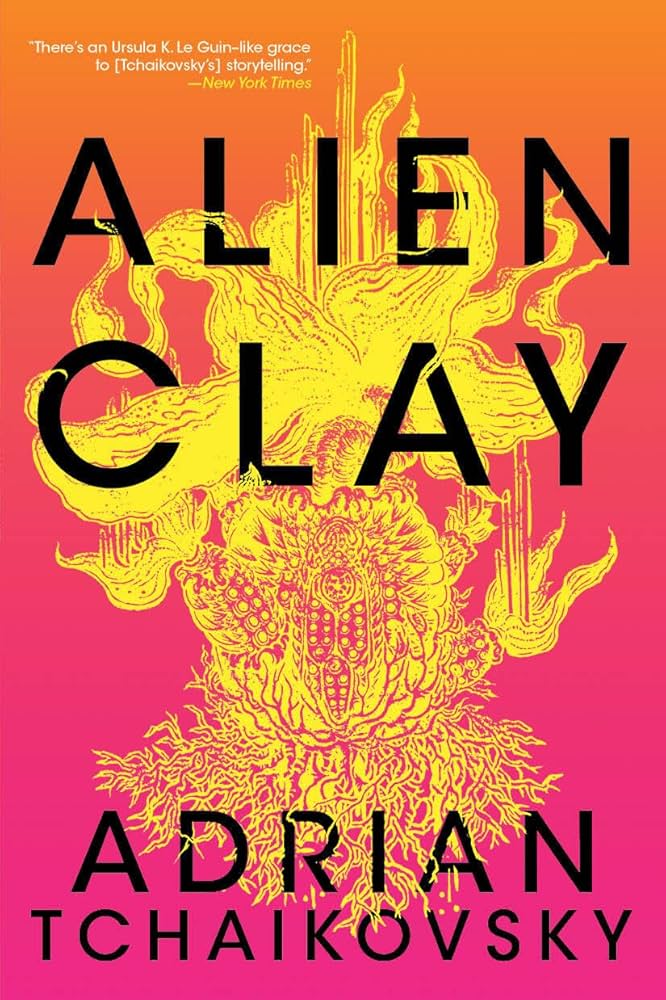
    2. Alien Clay by Adrian Tchaikovsky: I am on a mission to read everything Tchaikovsky has written, which is a tall order given how prolific he seems to be (I posted on Bluesky one morning about finishing another one of his books and how hopeful I was about meeting my goal, and within an hour he had posted about another book coming out). But! I’m having the time of my life, and this book was certainly a high point in my journey. It’s got everything: disgraced academics, prisons on hostile planets, authoritarian regimes clamping down on science, aliens that seem to ignore the idea of species altogether, rebellions, cheeky narration, betrayal, and an ending that’s either intolerably grim, or radiantly hopeful.
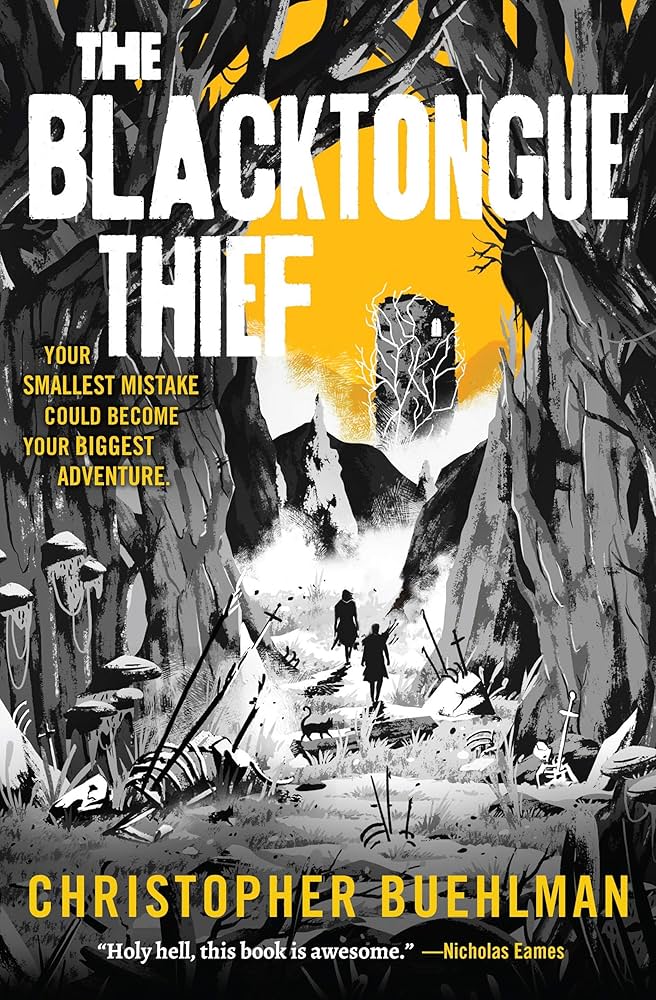
    3. The Blacktongue Thief by Christopher Buehlman: another book that lived on my TBR shelf (well, my Kindle) for ages before I picked it up. I actually started reading this in the middle of two other books, because I needed something to read at a buffet and my Kindle was more convenient. And oh, what a treat. I instantly bought into the world, into the grime and bleakness and grief of living in a place so marked by war and loss. Kinch is a fantastic narrator — there’s so much personality packed into every sentence — but the whirlwind of characters surrounding him is just as entertaining. It’s also terrifying; I’ve become fairly inured to being afraid of goblins after years of handily slaughtering countless thousands of them in D&D, but that fear is back with a vengeance. A mad delight, from beginning to end. I am hoping desperately for a sequel (though I’m excited to check out the prequel this year too!). UPDATE: the sequel comes out in October 2026!!
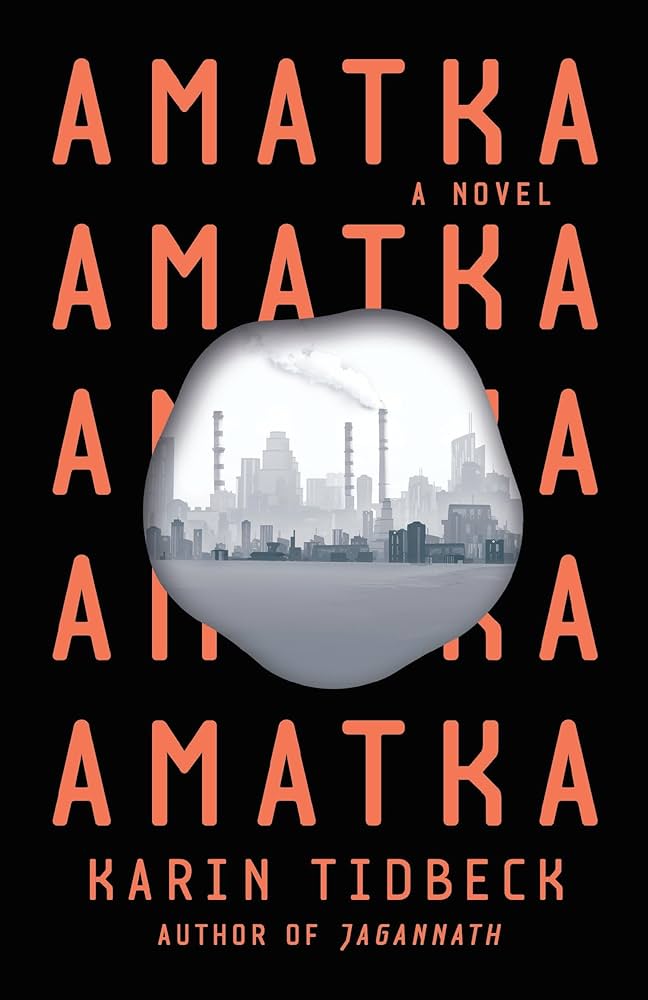
    4. Amatka by Karin Tidbeck: I read The Memory Theater by Tidbeck in…2023? Something like that. I wasn’t too fussed on it, but I’d heard a lot of praise for Amatka, so I gave it a whirl. And, uh. Holy shit. It’s got a great premise — the world is shaped by language! — and while I felt like the premise implied more Kafkaesque shenanigans as the narrator tried to figure out how to sell toiletries more effectively, what I got was so much better: a quiet, creeping dread, as I realized just how much language shaped not just the world but reality. A surreal, eerie story — though be forewarned: what the blurb calls a romance was to me more of an affectionate FWB situation.
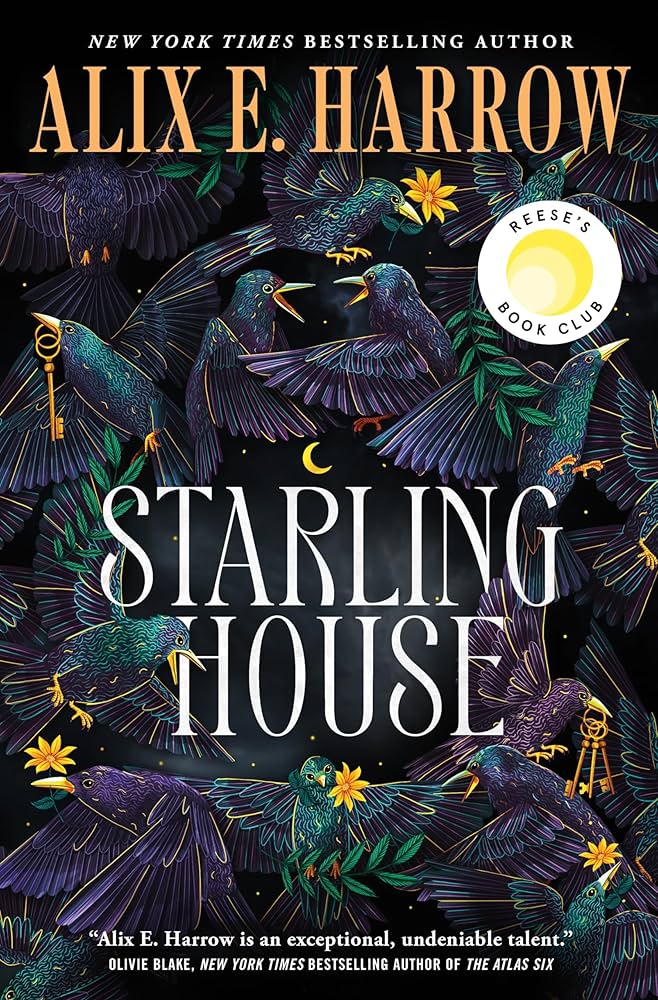
    5. Starling House by Alix E. Harrow: I have this thing with Harrow’s novels, where they don’t end up cohering for me until the 50% point, so I went in with that expectation, only to have it completely dashed in about three pages because Opal’s narration (another first-person POV) was so arresting. Not only does this book capture that exhausted, wrung-out feeling of towns left behind by industry and money, but it captures the fierce joy and pain of loving someone so much and being willing to sacrifice yourself so they can enjoy a better life (even if they have their own ideas about what their life should be). A ferocious, brash, fun novel.

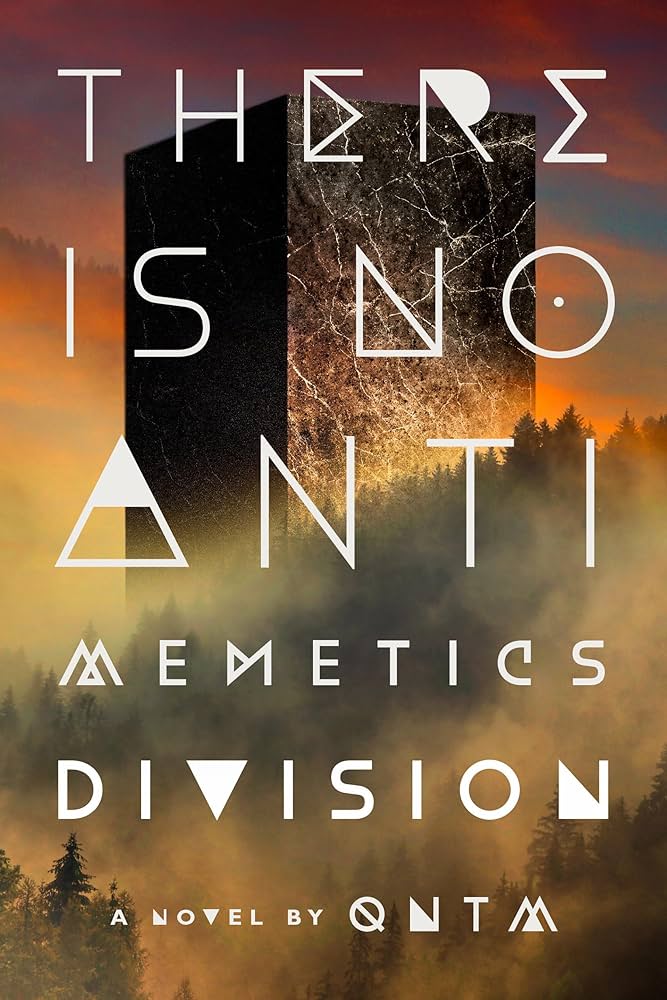
    6. There Is No Antimemetics Division by qntm: As an avowed fan of the SCP Foundation (someday I will submit my own!!! I will!!), it was so much fun to dive into a novel-length take on the Foundation — on its creepiest aspect, in my opinion. How do you fight an enemy that actively erases your memories of it? Or — how do you learn about something you can’t allow yourself to acknowledge existing? It’s a twisty, immersive read, desperately sad and grimly determined. Definitely deserves a reread soon, because I know I missed half the details the first time through.

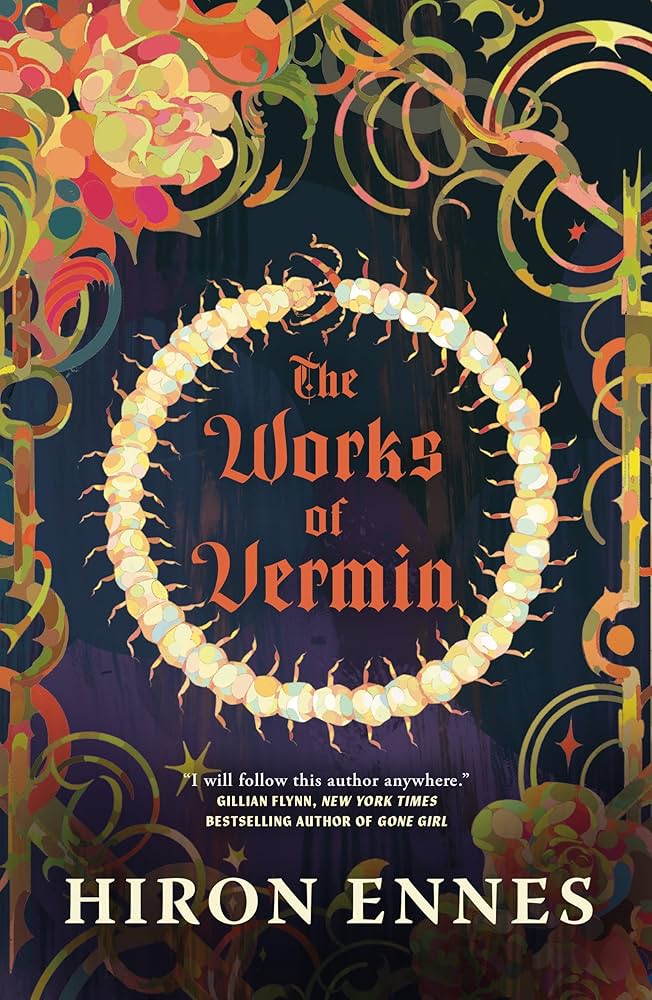
    7. The Works of Vermin by Hiron Ennes: I read Leech earlier this year, and adored it (I am weak for a good pastiche at all times), but The Works of Vermin blew me away. A corrupt, brutal city obsessed with art in all its forms, where everyone is using perfumes to make others hallucinate how they want to be perceived, with layers of decaying neighborhoods beneath the rich and glittering throngs, all of it packed into the trunk of a giant, petrified tree, all of it suspended over a very, very strange river. It’s a very queer work, obsessed with art and perception, and absolutely chock-full of BUGS. This also continues my new trend of reading a book about a City, But Weird as my last book of the year (for 2024, it was The West Passage by Jared Pechaček, which is also one of my favorite books ever).

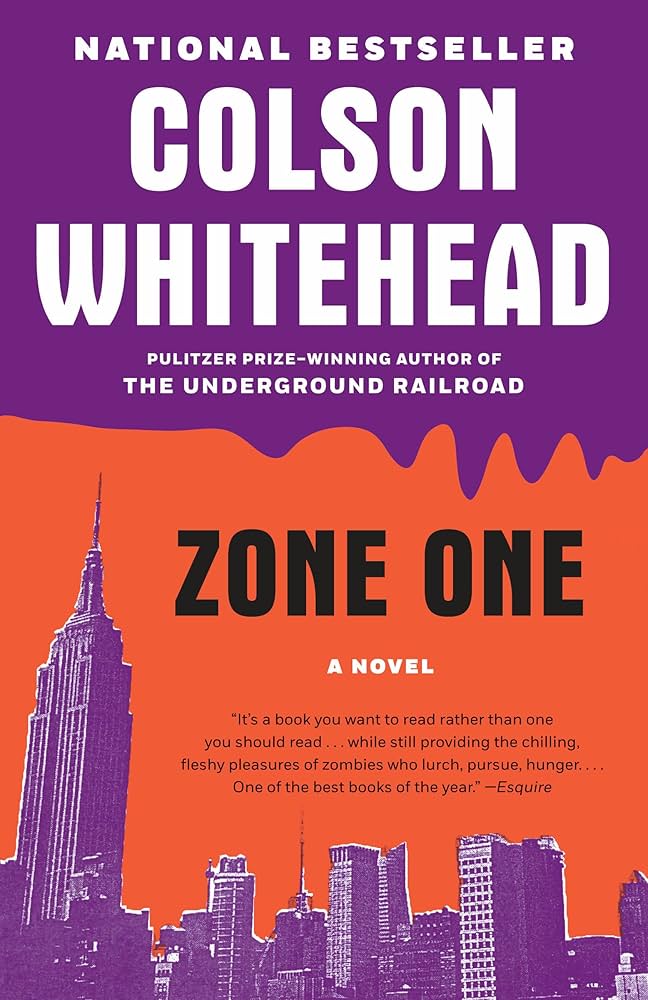
    8. Zone One by Colson Whitehead: Adding to the list of things I am weak for — zombies! I was especially interested in this book because of how literary a take it was on the zombie apocalypse, and I think the very fluid, purple prose and how it constantly slipped in and out of flashbacks gave even the worst of the horrors a dreamy, almost gentle air. It’s not quite removing the reader to a safe distance from what’s going on — it’s an incredibly bleak book — but it reads like a nightmare set to the page. Thoughtful, grim, beautiful — and just when you think it will only be those things, the teeth reappear.

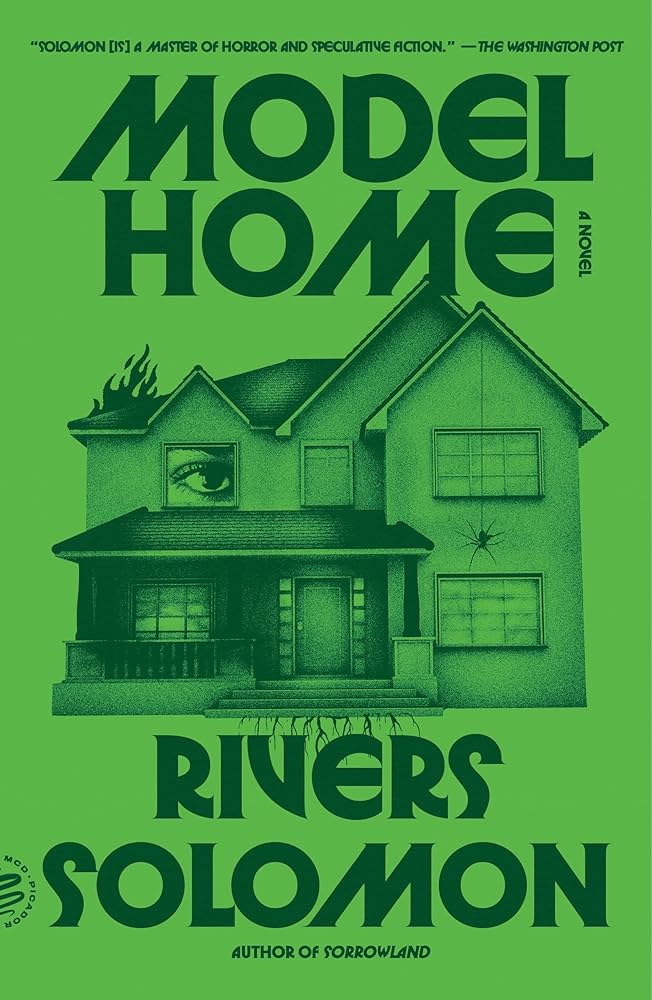
    9. Model Home by Rivers Solomon: I was so uncomfortable reading this book, which is exactly where Solomon wants us to be. It is a very political book at its heart, peeling back layers of Black trauma to show just how deep that pain runs, in both the present moment, and bleeding into the past and future. It’s also a book about family, the complex love families have for each other, even when there isn’t trauma and oppression marking each person — but the love and horror sing off the page, in equal measure. I think Model Home would be an excellent book to read alongside Jessica Johns’ Bad Cree, which delves into similar themes in a horror setting as well. And technically speaking, this was a fantastic book centered around a heartbreaking narration.

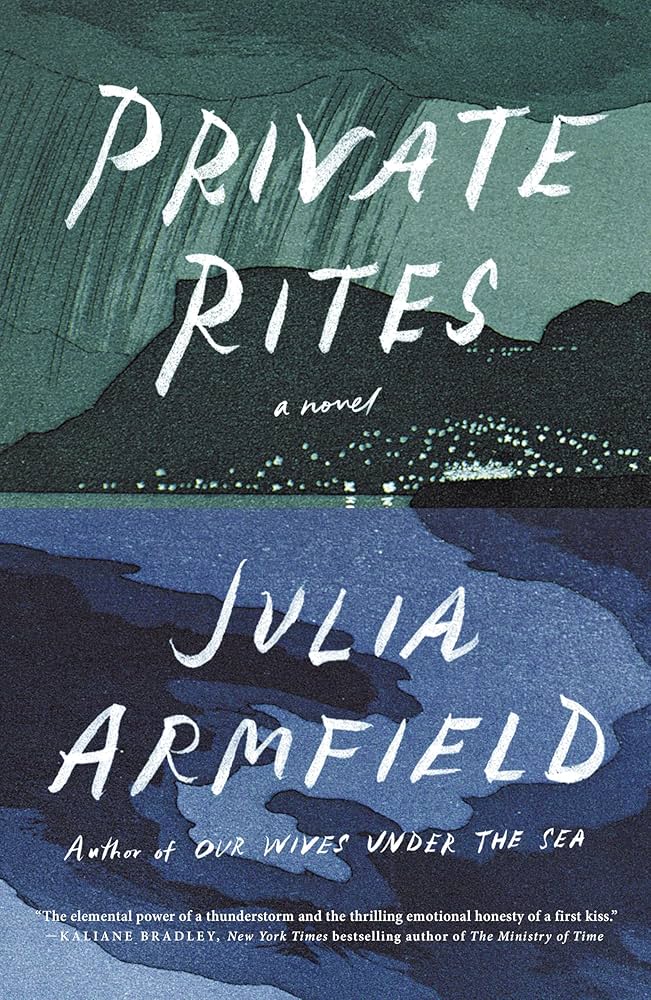
    10. Private Rites by Julia Armfield: After reading Our Wives Under the Sea a few years ago, I am ride-or-die for Armfield, and nothing changed after reading Private Rites. I love Shakespeare reframings, so this apocalyptic take on King Lear was already primed for me to love, and the relationship between the sisters was both heartbreaking and (purposefully!) frustrating. As relationships with sisters often are! The quiet, almost resigned narration belies the horror of what’s going on: the world is ending (as it always has been), but there are still moments of sunlight, brief slants shafts of warmth and peace, a hand to hold as the waters rise.

    Honorable mentions: Metal From Heaven by August Clarke, Ring Shout by P. Djèlí Clark, House of Open Wounds by Adrian Tchaikovsky, The Starving Saints by Caitlin Starling, A Drop of Corruption by Robert Jackson Bennett, Leech by Hiron Ennes, The Anomaly by Hervé Le Tellier, Notes From a Regicide by Isaac Fellman, The Book of Love by Kelly Link, and I Cheerfully Refuse by Leif Enger.

  • a medieval illlumination, featuring a dog biting the neck of a duck. the duck is saying "queck"

    It’s me, your girl, taking another whack at the blogging thing! I think I’ve found an odd sort of consistency re: blogging, in that I keep trying regularly to blog regularly, and I think that counts for something.

    A note to my slightly future self: let’s work on this blog template, shall we?

    But first! A look at 2025, and how I fared in reading, writing, and life.

    Reading!
    I initially set my reading goal for 120 books, since I handily met and then exceeded that goal in 2024 (by only three books, but still!), but about halfway through the year, I ran into the wall that was Seth Dickinson’s Exordium, and while fighting for two weeks with it, lost all my reading momentum. It took most of the year to get it back.

    Now — Exordium is not a bad book, and as a fan of the game Destiny, I like Dickinson’s writing, but something about the repetitive (almost defensively so) plot, the formatting of the book itself (small print, relatively low-contrast ink), and the incredibly dark premise, I just could not finish it, but I also didn’t want to admit that it wasn’t working for me. So. Lesson learned — or rather, lesson reinforced: it’s okay to put something aside, for a moment or forever or for any length of time between those two points.

    I ended up dropping my goal to 100 books for the year, and got a late-year bit of momentum back, helped by having a truly luxurious week and a half off for the holidays. I read 103 books this year, and plan to write about my best-of list tomorrow. One interesting data point is that I reached for comparatively more literary fiction this year than I have for many years, and that seems to be a trend continuing into 2026. At least, for the first four days of 2026.

    Writing
    I want to start this section out with an actual, unassailable win: my first published short story, “Miracle Aisle”, came out in the Autumn 2025 issue of A Coup of Owls! It’s a slightly gross, slightly creepy story about a retail worker who starts to encounter strange going-ons in their store, and instead of being afraid, decide to go along for the ride. I am delighted to have my words in such a cool magazine (and funnily enough, two other members from one of my writing groups have been published in ACOO too, so clearly they’re picking up what we’re putting down!), and I’m still carrying the validation with me: I am an Author now, on top of being a Writer.

    As for other writing…hm. I won’t say this is a failed year; despite my word count continuing to drop, I still wrote a lot: 180584 words. That’s pretty impressive, especially since it was almost all original fiction. I do think it’s important for me to remember that when I was churning out 400,000+ words a year, I was doing so with fanfic. All the scaffolding was in place; I didn’t have to spend time worldbuilding or charting character arcs. I just had to recontextualize material that already existed. Now, everything is from the ground up, and that takes time.

    Also: the fascism. It needs to be said.

    I did manage to update my last lingering fic, a 2ha AU called “A Tear in the Vein”. Given that this poor fic had languished for almost two years between updates, this was very satisfying. Still one chapter to go, but I’m at the emotional climax, which should be very fun to write! At some point this year!

    Otherwise, I worked on two connected books, part of a planned trilogy I’m calling the Druid Romances. Mostly I am using these books to deal with my feelings about Dragon Age, D&D, and BG3 — especially my feelings about Dragon Age, and how I had to stop playing DATV before it killed my love for the entire franchise. As with pretty much all my original fiction, they connect to a big paracosm, but I’m still working on how the three planned stories all interconnect. It’s a fun project!

    Toward the end of the year, though, I went back to the Dashaverse, my dark fantasy apocalyptic sapphic romance — a very thematically appropriate thing to work on as the year gets colder and darker, given that most of the action takes place on a windswept, frozen mountain that periodically vomits out horrors that our heroine has to kill. My goal is to keep up the momentum on this project, and hopefully have a finished draft at the end of the year…so here goes!

    Life
    At the beginning of February 2025, I had to say goodbye to Orpheus, my weird, confident, adaptable, shrimp-obsessed, loud cat. I had him for eight years out of his fifteen, and there are still moments when I turn my head because I think I’ve glimpsed him from the corner of my eye — but those eight years were great. He was truly the best first cat-of-my-own I could have asked for, and I will never stop missing him.

    I spent three months telling myself I would never get another cat, but ended up starting to look at different rescues. Then, on the Saturday before Easter, my parents’ neighbor (who had just adopted a cat herself) came over with pictures of another cat at a local shelter. “She’s the most gorgeous cat I’ve seen. I already told the adoption lead about you, you should go see her!”

    Reader, I adopted her. Lady Annabelle Blue is a very different cat than Orpheus — affectionate, a bit of a crybaby, not food-motivated whatsoever (except for Churus), playful, dainty, demure. She’s perfect, just as he was.


    So, we’ve arrived at 2026. May it be the joyful, just, and peaceful we all deserve — and may we all work toward making it so.

  • a medieval illlumination, featuring a dog biting the neck of a duck. the duck is saying "queck"

    I’m a little more on top of things than last month — I’m only three days late! What a resounding blogging success I am.

    Books Read:

    1. The Seven Moons of Maali Almeida by Shehan Karunatilaka: This had been on my to-read list for a while (possibly since it was published), and I’ve been keeping an eye out for it as I trawl used bookstores because that cover is gorgeous. Then I remembered libraries exist, and my hold finally came up! It was really interesting reading this after having read Vajra Chandrasekera’s Rakesfall last year, as they both deal with the Sri Lankan civil war, but it was also…so, so bleak. Beautifully written (I am a sucker for a second-person POV), but heartbreaking, and unflinching about the wide-flung web of trauma that imperialism inflicted (and is still inflicting) on Sri Lanka. It’s also a very darkly funny novel, a whirlwind of grotesque authorities and capricious ghosts, and a love story as well. I’m such a fan of stories where death is not the end, or even the middle, of the story, and there are just enough questions left by the end to keep me thinking about it, over a month later.

    2. Grave Empire by Richard Swan: I absolutely adored the first trilogy set in this world, but Grave Empire was…hm. Well, it’s got a fantastic set-up (“hey guys we think something has gone Very Wrong in the afterlife”), and there are just enough hints to the previous trilogy to satisfy my love for those books, but the execution falls flat. There are several plot lines, all converging on the same point, but only one actually lives up to its horrifying premise. It feels…almost careless, without the depth of character work that I loved before, and while a lot happens, enough happens off-screen or unclearly — and not in a way that feels like purposeful ambiguity (now that’s a heck of a phrase). It’s still entertaining, but I admit to feeling disappointed.

    3. The Angel of Indian Lake by Stephen Graham Jones: Sadly, this trilogy has been giving me diminishing returns; his writing is as energetic and innovative as ever, but the stream-of-consciousness style leads to a lack of clarity — which I think the series needed more of, given the sheer weight of history involved. At one point, people are dying every paragraph, but it’s not clear who or what is killing them, or why, but the narrator is rambling about her boots as she witnesses this. Granted this may be about taste, but I do feel there should be some payoff and some level of plot-related answers, if only to give the remaining ambiguity more heft (there was a conversation about this in my writing group this morning)! Overall I liked this trilogy, but I’m still frustrated with the experience of reading it (and oh boy, did this book need to be tightened up).

    4. House of Open Wounds by Adrian Tchaikovsky: A dark, gross, violent return to the world introduced in City of Last Chances, this was just…wonderful. I adored Yasnic’s reappearance (God is still an asshole), and the new cast of characters populating the field hospital are truly my favorite flavors of messed-up. The empire continues its relentless push across the world, decanting gods and magic users to power their weapons, absorbing everything along the way, using up the souls of their own soldiers in necromantic attacks on their enemies…but there is still room for resistance, and hope. Just a delightful read, and I have now officially read ten of his books! Out of like…twelve million. I’ll get there someday!

    5. Yellow Jessamine by Caitlin Starling: A very spooky, dread-soaked novella about a rich young woman attempting to navigate the fall of her city, local politics, and a new plague. Lots of great elements, but I think this should have been about forty pages longer to emphasize the central relationship. And to make all the blurbs about “sapphic horror” resemble the reality of the book a bit more. I just wanted to spend more time in this incredibly depressing, murderous world, but alas! Hopefully Starling plays on these themes a bit more in another book, or returns to this world in earnest.

    6. Forget Me Not by Julie Soto: Generally speaking, I don’t care about weddings or contemporary romance, but this one grabbed me right away and did not let go. First-person narration can easily fall flat for me, if the narrators don’t have good voices, but Ama and Elliott were fun and breezy, grumpy and intense, respectively, and having them play off each other was delightful. The characters are smart, and doing their best to be kind, which I always appreciate, but their central conflict (this is, after all, a second-chance romance) is believable and so, so sad. Just a blur of humor and sweetness, which is what I needed, since I took a break from my last book of the month to read this one.

    7. The Stone of Farewell by Tad Williams: I miss the days when epic fantasy took a whole book to get anywhere at all (though I love where fantasy is at now!), because it was only about halfway through the six hundred pages of this book that things really started to kick off. It’s Tolkien-esque fantasy, possibly the most Tolkien-esque fantasy other than Terry Brooks’s original Shannara books, which means a lot of discussion of honor, the value of peace, the celebration of people standing up to do what they can, even as the darkness approaches. Our protagonist, Simon, is still very much a teenage boy, without much besides luck and very helpful friends to move him along his quest (while other, more high-stakes quests are happening around him) — I read a post on Tumblr that said Simon’s big power-up at the end of the first novel led to him getting, at most, a +1 on some of his wisdom rolls, and that is the truth — but he’s so compelling, so sympathetic, and so real that I can’t help rooting for him. Or being very, very afraid about how all of this will end.

    So, only seven books read this month…but most of them were 500+ pages, so I still read a lot.

    Writing

    Well! Writing happened. Sometimes.

    I ended up going to stay at my parents’ for a week, which means no real writing happens (though I did indulge in writing some of a Jayvik-inspired fantasy romance in my morning pages while I was there); I try to look at the time there as crafting and reading focused, as recharging time for writing, but it’s frustrating to not make much progress.

    I wrote 18,462 words this month, out of my goal of 20,000. Most of those words were on an alien romance novelette, which is on pause as I work up energy for the last big push to finish the first draft. Then there’s working up the energy for revising it, which is…probably why I haven’t pushed myself to finish it yet. Oops?

    There’s just not a lot of energy around these days, where I am. I want to write! I want to finish things! I want to share things! But…I am easily made anxious, and the world is very good at making me anxious right now, and writing is always the first thing to fall apart when that happens.

    So: goals for April? Reducing sources of anxiety. Creating simplicity. Staying off social media, getting good sleep. Morning pages every day. Writing, hopefully, at some point.

    Being kind. Fighting back. Reading more, walking more. The days are warming up here in New England, and small, imperfect things are beginning to bloom. Maybe I will be one of them.

  • a medieval illlumination, featuring a dog biting the neck of a duck. the duck is saying "queck"

    Only a few days (uh, almost two weeks) late! Not too shabby. And! This is officially my third blog post of the year, so truly I am a roaring success.

    So let’s get into it! “It” being “how well did I do on any of my goals for February?”

    The answer is: not too badly!

    Writing: As usual, I set my writing goal to 15,000 words for the month (it should have been 14,000, given that February only has 28 days and I like to aim for an average of 500 words per day, but I decided to stay consistent). I ended up writing 18,502 words! Most of those words went toward a project for my writing group — we’re all writing our takes on “alien matchmaking romance” — but I also revised, expanded, and updated my 2ha fic, A Tear in the Vein.

    Writing-wise, that’s the most successful month I’ve had in…months, if not a year or more. So, wildly drunk on the first glimpse of success I’ve had in forever, I decided to up my writing goal for March to 20,000 words (along with morning pages every day, that old standard). We’ll see if I’ve set myself up for failure, or if I’m finally getting a little writing oomph back.

    Reading: I stayed on target for my 120 books goal for 2025, reading twelve books this month!

    1. Mordew by Alex Pheby: Great concept, lackluster execution. Sometimes, a book’s worldbuilding is good enough to offset flat or outright frustrating characters, or a lack of plot. While promising, this book’s worldbuilding ended up falling apart around the one-third mark. I described it as Charles Dickens meets Gene Wolfe, but in the end, there was way too much Dickens, not enough Wolfe (and not even enough of the fun parts of Dickens). This really turned into a slog by the end.
    2. Ensnared by Tiffany Roberts (book one of a trilogy)
    3. Enthralled by Tiffany Roberts (book two of a trilogy)
    4. Bound by Tiffany Roberts (book three of a trilogy): I am so weak for alien-human romances, so I was ready (especially after reading Mordew) to indulge in this trilogy. It was very sweet, as is most of Roberts’ writing, and I was surprised at how dark it got, as well. I have a feeling they’ve read The Last Hour of Gann, given certain plot turns, but in the end, this trilogy is just fun, horny candy for your brain. As long as you don’t mind spiders.
    5. Saved by the Alien Crime Boss by Tiffany Roberts: The latest addition to the “Aliens Among Us” set of romances, but this one…was just a big pile of nothing. Most of the plot beats were the same as Stalked by the Alien Assassin, and the main characters had no actual character. It’s fine if you want mindless fun, but this just feels lazy.
    6. The Tainted Cup by Robert Jackson Bennett: A BANGER. A TRUE BANGER. It’s a murder mystery, set in a world where leviathans rise from the sea and invade the land, and humans have developed a system of bio-organic quasi-organic augmentations to help them keep society running, and to try to fight off the leviathans. Just…masterfully told, wildly creative, and full of vivid characters. I’ve only read two of his books, but Bennett is quickly approaching “instant pre-order in hard copy” status for me. SUCH a fun read, definitely going to be one of the best books of the year for me.
    7. Hell Followed With Us by Andrew Joseph White: Benji, a trans teenage boy, tries to escape from the extreme Christian cult that not only started Armageddon, but that wants to force him to play the part of a sacrificial girl. He falls in with a group of queer teenagers who are fighting a guerrilla war against the cult AND the monsters it unleashed, just to have a chance at living to be queer adults. Great horror aspects, and thoughtful, poignant character work all over the place. I do think it was a bit long, but the writing is immersive and emotional. I don’t read a ton of YA, but I’m glad I picked this up!
    8. The Butcher of the Forest by Premee Mohammed: Sumptuous, scary, and brutal — I’m honestly surprised at the depth of emotion and world that Mohammed injected into this novella (it’s just over 100 pages!), but I also want to peer inside her skull and see how she pulled it off. I love stories that explore bargaining with the fey/Fair Folk (not that this book ever names them as such), and this book does a great job of outlining how terrifying those interactions would be. You always lose something, when you make such a bargain…well. Maybe not you. But someone always loses.
    9. Zone One by Colson Whitehead: I was a goofball and went into this expecting more of a genre approach, so the VERY literary style (non-linear, full of wordplay, very verbose) got on my nerves at first, but once I got over my expectations, this came together really beautifully. A rather morose meditation on modern consumption culture, and the alienation that comes with it, but if you’re tired of shoot-’em-up zombie novels/movies/shows, this is a great palate cleanser.
    10. Alien Clay by Adrian Tchaikovsky: Have I told you guys about how I had the bright idea to read everything Adrian Tchaikovsky has ever written? Well, let me tell you what a mistake that was — not because he’s a bad writer, by any stretch, but because he publishes approximately seventy-four books a year and no matter how fast, I can’t keep up. It’s still fun to try! Alien Clay spoke to me, as someone both deeply troubled by what’s going on in my country, and as someone who works in higher education — it’s the story of an academic biologist who gets arrested for dissenting against an authoritarian government, and sent off to do hard labor on one of the few worlds discovered with alien life. Things…do not go as he expects. The cheeky first-person narrator is a departure from a lot of what I’ve read from Tchaikovsky, but it makes for a sly, winking experience — and the final reveal is a sweeping, fascinating one.
    11. The Last Hour of Gann by R. Lee Smith: Reader, I reread it. I often see this marketed as a romance, though if you want to REALLY be accurate, it’s more of a “philosophical science fiction road trip with a complex love story” kind of book. It is definitely romantic, but the leads are difficult, stubborn people, and Smith was clearly just as interested in the philosophical underpinnings of her world as she was in her main couple falling in love. And this is a dark book — the only book I can think of with a similarly long list of content warnings is 2ha — that refuses to look away from every grim, hopeless moment. It’s incredibly satisfying, but not exactly a comfort read. Still…if dark is what you’re craving, give it a try, and trust the reveals to balance out some REALLY uncomfortable moments toward the beginning.
    12. Three Parts Dead by Max Gladstone: I realized I was three books behind on this series, so I’m doing a leisurely reread to get myself back up to speed. I love how these books explore the relationship between the mortal and the divine, and how, if the divine is taken out of the equation, something needs to keep its place to make sure the miracles keep running. And Tara! Tara Abernathy! The lawyer/necromancer of my heart! She’s such a wily, intelligent, driven woman, but her goals as a Craftwoman often bump up against that silly little wall of “acting like a good person”. It’s a rich, complex world, and I’m loving the dive back into its depths.

    A very successful month, all told! And I’m keeping up (mostly) with blogging, so I think I’m going to allow myself a pat on the back before getting focused again.

    Goals for March (now that we’re halfway through): write 20,000 words, do morning pages every day, finish the alien matchmaking romance, poke at the final chapter of my 2ha fic, maybe work on one of the short story ideas I have floating around in my head. Also: more consistent sleep!! When am I going to get it into my head that I need at least eight hours to be functional?

    Maybe this is the month. I can at least try!

  • a medieval illlumination, featuring a dog biting the neck of a duck. the duck is saying "queck"

    Look at me, updating twice in the same year! Maybe 2025 is the year that blogging sticks. One can hope!

    In any case, January 2025 was something of a lackluster month, in terms of both reading and writing. Back in 2023, to ease some of the stress I was putting on myself regarding my writing (and oh, that’s a blog post in and of itself; possibly a whole series!), I brought my daily writing goal down from 1,000 words a day/365,000 a year, to 500 words a day/182,500 a year. To be honest, that felt like a huge admission of defeat, and even more so now — despite lowering my expectations, I’ve barely even met the new goal, ever since.

    All I need to do is make vague distressed noises and wave at my surroundings for an explanation, but explanations, however justified and understandable, don’t make me feel like less of a loser. So that’s something to work on, in these coming months: kindness, directed inward.

    That said: what did I accomplish this month?

    Well, victories first: I finally updated my long-languishing 2ha fic, A Tear in the Vein! This had literally been sitting on Ao3, un-updated, since September 2022. Big oof. I worked on it over the intervening years, but nothing felt worthy of being posted, and I had convinced myself it wasn’t going to be finished — which fed in to my “you are a loser at writing and also everything else” mentality. Fun times!

    But, about a week ago, I had a thought: why not just chop the chapter off where I still felt confident about it, revise that, rewrite whatever needs to be rewritten and post that? Sure, it wouldn’t be the eighteen thousand word long chapters I was posting before, but why did the chapter have to be that long?

    So, yesterday, I sat down, and chopped, and revised, and chopped some more, and rewrote, and wrote, and then revised it again, and posted it. I added a little explanation about why it had taken me so long, and thanked everyone for their patience, and then immediately lapsed into the well-known “commints? commints?” routine.

    When the comments did arrive, they were uniformly kind and supportive, and so excited for me to be posting again.

    Let me tell you: comments like that are pure cocaine in terms of writing energy. I have some other pieces I want to finish up before I go back to A Tear in the Vein (the ending is going to be Emotionally Devastating, and there are some fiddly bits I need to think about before I actually start writing), but I know I can finish it now. That’s a huge win.

    I also worked a bit on my beloved dark fantasy sapphic romance novel, where the lesbians are stupid and the world is about ten seconds away from ending, and I also wrote about half of a project for my writing group: we’re each writing an alien romance, centered around the theme of matchmaking services. This is pure comfort writing, for me, and I get to explore a character that I’ve wanted to write about for a while.

    All told, I only wrote 12,146 words in January 2025, but I also did morning pages every day. Not a bad month, but I’m hoping I can carry some energy over into February!

    As for reading, well. I set my 2025 reading goal to 120 books for the year, which means I have to read an average of 10 per month to hit said goal. I read eight complete books in January 2025; I started a ninth, but finished it on February 1.

    The first eight books were all rereads: The Queen’s Thief series, by Megan Whalen Turner, and A Memory Called Empire/A Desolation Called Peace by Arkady Martine. All incredible books, all incredibly inspiring.

    …and then I picked up Alex Pheby’s Mordew, because it sounded like my kind of weird: a young boy lives in a city built of the corpse of God, and develops power that threatens the Master of said city. There’s living Mud! Talking dogs! Bizarrely mutated people! Bacon!

    It should have been fun, but I am a character-forward reader, and if the characters don’t hit, then the book won’t hit. The characters in Mordew are flat, without organic relationships or character arcs, and the protagonist is so passive it’s hard to feel interested in his story. The blurb on the back — the city, the boy, the god, the Master — only covers the last 100 pages, and everything up to that point is a wash-lather-rinse-repeat cycle of what feels like a Dickens homage (down to an Artful Dodger character).

    It’s a 600+ page novel, with a glossary that takes up over 100 pages of that count. Suffice to say, this book was not for me, and I will not be reading the sequels. There may be another rant in me about why this book did not work, but that’s for another day.

    Now: I have a bunch of romance novels and novellas that I can use to get my reading goal back on track, and I think I’ll be digging into the romance novels first. I need some yearning, some horniness, some MMCs who are in love but Real Mad About It. And if February isn’t the month for that, what month is?

    Today, though, I’m working on a romance novelette of my own, which will hopefully be ready for submission by the end of the week. It’s another project that’s languished for too long, and I hope by clearing the deck (so to speak), I’ll clear the mental clutter, and be better at focusing on my writing.

    Onward!

  • a medieval illlumination, featuring a dog biting the neck of a duck. the duck is saying "queck"

    It’s that time again! That time when I start to think I can be a blogger everyone is posting their best-of lists, and who am I to ignore what’s popular?

    I mean, aside from my entire history of existence.

    Anyways! I read 123 books in 2024, with a goal of 120, so it was a very satisfying reading year. I’ve decided to keep the 120 book goal for 2025, with a focus on paring down my physical TBR stacks (we shall not discuss the unread e-book situation. No, we shall not). I did some bookshelf reorganizing last night — so satisfying! — and now my physical books are visible and accessible, which is half the battle when you’re trying to read down the stacks.

    Out of those 120 books, a bunch stood out as the best I read this year. Namely:

    1. City of Last Chances by Adrian Tchaikovsky: I am, loudly and consistently, an Adrian Tchaikovsky superfan; I’ve never read a book by him that isn’t at least thoroughly enjoyable (even if it doesn’t reach the heights of Children of Time, which is the first, and as of now best, book I read of his). There’s something so comforting in reading his work, in knowing that I’m in the hands of a writer who is not just incredibly competent, but compelling, thoughtful, and imaginative.

      City of Last Chances is no exception. Most of what I’ve read of Tchaikovsky’s work has been his science fiction, so seeing him at work in fantasy was a rare treat. Here, in the city of Ilmar — a city under occupation, a city under siege — revolution is brewing, but there are dark stirrings in the Anchorwood, a wood that is both forest and portal. That’s a very thin and inadequate blurb about a book that feels, to me, like a delicious mash-up of Dragon Age 2 and Les Misérables. There’s a kaleidoscope of narrators, from the last priest and worshiper of a god, to a warrior displaced from another world searching for his wife, to students fanning the revolutionary fires, and many, many more. It’s creepy, bleak, tense, and full of subtle magic. Is it a happy story? Not particularly, but it is a frightening, satisfying one, with Tchaikovsky’s usual love for invertebrates on display.

      This is the first book in a series (trilogy?), though it seems that the sequels are standalones — I plan to devour them all! Along with the rest of Tchaikovsky’s work, but given how the man publishes at least three books a year, I have my work cut out for me.
    2. The Spear Cuts Through Water by Simon Jimenez: Oh lord. Okay. This book has such a deeply deceptive simplicity of summary (that’s enough alliteration for today, Bethany), and it in no way prepared me for how lush, complex, and ambitious this book is. It can be summed up as “two young men help a goddess escape the shackles of a tyrant emperor, and encounter some trouble along the way” — and while that is, technically, the plot, it leaves out how that story is nested within two others: a play, performed in a theater within a dream, and the family history of a far-future descendant of the characters in the first story.

      Each layer of the narrative is in constant dialogue with itself, and with each other layer, often in the same paragraph. It’s a love letter to oral storytelling, a call to rise against oppressors, a love story, a horror story — it’s so many things a review can’t really do them justice. And on top of all of that, gorgeous prose! What more could you ask for?

      It’s a novel that rewards patience, and demands a lot of the reader. I suggest reading it in big chunks, then letting them digest before diving back in. Might not be for everyone (it is BRUTAL in places), but you have to appreciate the scope of Jimenez’s ambition as a writer.
    3. North Woods by Daniel Mason: I admit, I was swayed to read this book by the cover. It’s so striking! And then, once I started reading and realized it took place in my beloved Western Massachusetts, I was sold.

      This is a subtle book, more so than pretty much anything else I read this year, so subtle I didn’t realize the crescendo was happening until I was in the middle of it. Each section feels self-contained, circling around the same house in the North Woods, recording the stories of those who lived in and near it — starting with two runaway lovers in the Puritan age of New England. There are artists, there are apples, there is snow and hunger and loss; we see the house and the woods through the eyes of all the inhabitants, even down to the beetles.

      As someone whose grandfather lived in a moldering old mansion on the Cape, the descriptions of the crumbling house and its contents struck me, deeply and sometimes painfully. The past is never quite gone, this book seems to say, and it may sometimes even touch the present, but never without grief and wistful regret. North Woods builds to such a beautiful ending, though, that I can only be thankful for the experience, and the reminder.
    4. The Reformatory by Tananarive Due: This was…oof. I knew it would be rough going in, but this books haunts me, if you’ll excuse the pun. I sometimes feel like, with horror novels, that the quality of the prose suffers in comparison to the plot, but Due managed to write an absolutely beautiful, immersive novel while also scaring the shit out of me.

      And the worst part? Like all of the truly horrifying novels, the most vile cruelties are the good old human ones. Yes, there are ghosts, and yes, they are terrifying, but the titular Reformatory and the humans who run it are far, far worse. Due is writing from history, a history that is baked into what America is — a history that still influences America today. There were schools like this, where the white men running it were just as evil and abusive and racist, and Black children suffered just as Robbie did.

      But she also writes about Black communities, and how they supported each other and helped each other survive the absolute shit they were forced to endure, and the glimpses of the growing Civil Rights movement shed light on the bleak events of the novel. The ending kicks absolute ass, and I was so sad to leave the characters behind. This was the first of Due’s writing for me, but I’ve already added all her books to my TBR.
    5. Dark is Better by Gemma Files: I read Experimental Film back in 2022, and immediately fell in love with Files’s writing. I really enjoyed the take on found footage horror (something that’s tough to pull off in a book!), and the way it showed off the depth of Files’s experience as a film critic was deftly done. So, I was really excited to dive into her short fiction!

      And let me tell you: every single story in this collection is good. Like, really, really good. They’re not all bangers, but they all do something different and interesting and awful (in the best way) — shifting POVs, changes in narrative tone, a vast range of story subjects — and none of them overstay their welcome. It’s so clear that Files is a master of short fiction, on top of being a TERRIFYING WRITER.

      The absolute bangers, for me, were the opening novelette “[Anasazi]” (this one will appeal most to fellow SCP Foundation fans, I think!), “each thing I show you is a piece of my death” (which hits on the film industry again, a recurring theme in Files’s work), and “Slick Black Bones and Soft Black Stars”, which is one of the best riffs on The King in Yellow that I’ve come across.

      Just a delicious collection, from beginning to end. My only quibble is that one story mentioned on the back cover seems to be missing, but I haven’t been able to find out for sure.
    6. Asunder by Kerstin Hall: There’s a very specific pleasure in walking into a book without having any real expectations, and knowing nothing about the author’s previous work, and then discovering that the book was indeed Your Thing. That was my experience with Asunder; I had the blurb to go by, which is an accurate but wholly inadequate description of what goes on. Yes, Carys is bound to a truly horrific god/demon/secret third thing; yes, she commits an altruistic act of magic that gets her into all kind of trouble.

      But none of that really gets into the strangeness of this world, into which Hall throws us without much ceremony, trusting that we’ll pick up the borders of the world and its history without having them explicitly laid out for us. It’s not an approach to storytelling — especially in fantasy, where so much of the story often relies on exposition and description — and there are books where it hasn’t worked for me. By keeping the focus quite tight on Carys — miserable, determined, lonely Carys — and letting us see through her eyes, the scope of Asunder feels vast, but never overwhelming. It’s personal, subtle, and terrifying. Gorgeous prose, charming side characters, and a living, vibrant world all cohere into a truly satisfying novel.

      It builds to a gloriously disturbing climax, and let me tell you, the scream I screamed when I got to the end!! At least Hall has said a sequel is in the works, and I will happily camp out on her doorstep till it arrives.
    7. I Who Have Never Known Men by Jacqueline Harpman: The feel-bad classic!! I think I saw this recommended on r/horrorlit, which is kind of hit or miss for me, but this was a hit. As in an emotional one.

      The synopsis is deceptively simple: a group of women are trapped in a cage, guarded by soldiers who never speak to or acknowledge them, and none of them remember how they got there. Simultaneously trapped and on display, the women try to survive. The story is narrated by a nameless girl who was somehow captured (if they were, indeed, captured) with the rest of the women, but she is fundamentally disconnected from them because she lacks any of the touchstones or cultural knowledge from a previous life.

      It is…really bleak. There is no answer given for why or how the women were taken, and so the questions turn inward: how can one be human, without ever really knowing them or the world? What comes once the basic problem of survival has been solved?

      The prose itself is river-stone smooth, again deceptively so — to the point that the horror of the narrator’s situation arrives at a delay. I really had to sit with this book when I finished it, but it’s earned a place as a hard copy book on my shelves. The highest praise for a book I can muster, really.
    8. The Dragonbone Chair by Tad Williams: This series has been on my to-read list for about twenty-five years, in a nebulous sort of way; I always meant to get around to them, but they were never officially on the TBR list. I’m still not sure what inspired me to dive in, but over Thanksgiving, I entered the world of Osten Ard and never wanted to leave.

      It may feel ponderous and quaint to fantasy readers today, but for a book written in the 1980s, it avoids a lot of easy, trite plot twists, and rather than whirling us (and the characters) away on a picaresque coming-of-age story, it takes its graceful, patient time to get started. Hints of the larger plot are given early on, but since most of those hints arrive in smaller scenes, we spend the first 100 pages or so deeply involved in Simon’s POV. And Simon is, as the narrative is at great pains to emphasize, a very normal, very un-Chosen teenage boy.

      When it kicks off, though? Oh boy, it doesn’t stop. The feel of the story is pure high fantasy, but there are enough nightmarish scenes along the way to satisfy the biggest dark fantasy fans (like me!). Simon goes THROUGH IT, because this is a coming-of-age story, but he is not quite a hero, and has a painful awakening about what a hero has to do as the book develops.

      I have the rest of the trilogy on my shelf, but I want to take my time with this novel. It demands your patience and attention, but it’s so beautifully written, so wistful, and so creepy (hey guys? Guys? When you know a Very Bad Guy is called the Storm King, and you see a vast thunderstorm approaching? MAYBE YOU SHOULD START RUNNING), that those demands feel like spun sugar. A pure classic of the genre.
    9. Diavola by Jennifer Marie Thorne: This is a pretty polarizing read, but I loved it to pieces. I adore my family and get along with them really well, but even so, at times I dread big family vacations. In Diavola, Anna has to deal with a nightmare family (who all treat her as varying kinds of shit) even before the supernatural aspects kick in.

      As creepy as certain scenes were (there’s a reveal about a missing night that comes late in the novel that freaked me out), my horror was more along the lines of being AGHAST at Anna’s family. There’s so much nastiness oozing along under the surface, so much selfishness and pointless scapegoating, that we almost don’t NEED the supernatural to come along and cause trouble. What was supposed to be a vacation in the Italian countryside was always bound to turn into a battleground, just because of who everyone is.

      Anna is not a blameless heroine; she’s realistically flawed and it’s clear her family has had reasons to be angry with her in the past, but a lot of her worse choices in the novel can be put down to utter mental and emotional strain. She’s haunted on both sides, by the living and the dead.

      Couple all that tension with snarky, witty narration, and vivid scene-setting, and you have a joyfully nasty horror novel. Just fantastic.
    10. The West Passage by Jared Pechaček: My last read of the year, and one that I kept holding out for myself as a reward for other things: for finishing this other book, for finishing a writing project, for after the semester was over. Fie on me for waiting, especially since the synopsis — a country-sized city, brimming over with magic both new and festering, chained by ritual, and ruled over by giant Ladies of huge power and inscrutable motives — is basically my heroin.

      It’s medieval fantasy, one which doesn’t shy away from portraying how vibrant and noisy that time period was. Our main characters, Pell and Kew, explore the vast city on two separate missions (though they end up being inextricably linked, by an accident of Pell’s in the first chapter), their experiences colored by their lives as a worker trained to take care of births and the dead, and as the apprentice of the guardian of The West Passage, respectively. There’s accidental baby acquisition, giant frogs, mellified men, traveling merchants who ride enormous, semi-sentient legless men, lullabies…everything. This book has everything.

      If you ever wanted to live inside the illuminations in a medieval manuscript, this is the closest you’ll get. I never wanted to leave this world, this messy, embattled, vivid world — it feels like the child of Clive Barker’s Imajica and Gene Wolfe’s The Book of the New Sun, and I, for one, want to go live in the city of the Ladies. Just not…anywhere near their towers.

    So! There we have it. There were other books I really loved, like Vajra Chandrasekera’s Rakesfall, Sofia Samatar’s A Stranger in Olondria, and S.E. Wendel’s Halfling — and I could easily have done a top twenty post. Maybe I should? No, let’s keep it simple for now.

    And now, it’s off to my 2025 reading goal. I decided to stick with reading 120 books again, but I started off the year with two books that didn’t quite strike me the way I wanted to. I’ll give them a try later in the year, but for now I’m doing a reread of The Queen’s Thief series by Megan Whalen Turner. Because spending time yelling GEN, both internally and out loud, is never a bad idea.

    Happy 2025 to everyone, and may it be an excellent reading year for all of us!

  • a medieval illlumination, featuring a dog biting the neck of a duck. the duck is saying "queck"

    Yesterday, as I was wasting a few quiet moments at work, I was going through Twitter — rarely a good idea, despite all the lovely friends and fanworks I have there — and came across this article by Jess Bacon, about the juggernaut that is BookTok and how it may, in fact, be ruining reading.

    It’s a solid article, but the central question of “Is BookTok sucking the joy out of reading?” should really be rhetorical at this point. Full disclosure: I do have a TikTok account, where I follow accounts that talk about shearing sheep or how to fold t-shirts for more room in your drawers, and yes, a few book vloggers, but I limit my exposure because of the hectic, feverish energy I feel boiling off the site at all times. Vine, while possessing a lot of the same frenzied go-go-go, never felt quite so invasive, at least for me.

    But, when I first heard about BookTok, I thought it’d be fun. Lord help me, I thought about taking part. The core of my personality is “woman who reads anything she can get her hands on”, and has been since I was a baby and my parents bragged about how I never held a book upside down, not once, so talking about books with a big community sounded right up my alley.

    As Bacon’s article demonstrates, however, BookTok isn’t primarily interested in talking about books, unless it’s to brag about how they’re reading the right books, by whatever metric has gone the most viral. There’s a lot of good commentary, buried deep within the algorithm, about boosting marginalized voices, about hyping indigenous and #ownvoices writers, about diversifying and decolonizing your library, but meaningful dialogue around those topics tends to get buried by the avalanche of people showing off Instagram-perfect libraries and well-tabbed Colleen Hoover novels.

    Okay, maybe that last sentence was a bit snide, and I have seen BIPOC and LGBTQIA+ writers getting their due thanks to the TikTok wave. But Booktok, by and large, seems more concerned about how much you read, and if you’re reading the right books, rather than exploring organically, or reading for pleasure, or educating yourself. I want to ask all of these BookTokers spouting advice about how to read faster (always faster, and only sometimes deeper or more critically) what they remember about the two hundred books they read this year. One BookToker says to “eliminate your inner monologue”, in a video linked in Bacon’s article, but…that isn’t just a monologue. It’s you, engaging with the work you’re reading, allowing yourself to be in conversation with it as each page goes by.

    It strikes me that this is just a newly-glorified kind of consumerism; for so many people, it’s about stacking their shelves and their Goodreads lists with books that they’re going to plow through without fully engaging, because reading is now a competition. You have to read the right things, the best things, as many things as you can, all while trying to keep up with the next person on your FYP. And of course publishing loves it, because now they can foist off advertising onto the authors (and woe betide those that aren’t adored by the BookTok hashtag or the algorithm) and the readers. The executive level makes more money, the artists do more work.

    Speed-reading does have its uses, and if people genuinely like challenging themselves to see how many books they can read, I think that’s fantastic. A competition with yourself can be a fun adventure, a way to keep reading fresh and to help you discover new, unexpected ideas and experiences. But reading just to hit triple-digits, or to beat someone else (and let’s not get into how turning reading into a competition can get really ableist, really fast) takes away the joy of it, the connection between author and reader, which is at its heart a covenant: our time and attention for their talent and imagination.

    It hurts my heart to watch something I love be turned into something focused only on consumption, and not community or escape. To each their own, sure, but so much is being lost in this mad rush for more, more, more.